
ICP-OES / AES Spectrometers
ICP-OES Principle
Inductively coupled plasma optical emission spectroscopy (ICP-OES): how a plasma turns a liquid sample into a quantitative multi-element result.

What is ICP-OES?
ICP-OES (also called ICP-AES) is a workhorse technique for measuring the elemental composition of liquids — and of solids and metals once they have been dissolved. A high-temperature argon plasma excites the atoms in the sample so that each element emits light at its own characteristic wavelengths, which the spectrometer measures to identify and quantify dozens of elements at once, down to trace levels.
It is the method of choice in environmental, metallurgical, chemical, geological, food and pharmaceutical laboratories where accurate trace-to-major element results are needed across many samples.
The plasma: a light source at 10,000 K
A stream of argon gas flows through a torch surrounded by a radio-frequency induction coil. The RF field ionises the argon and sustains an inductively coupled plasma reaching temperatures around 8,000–10,000 K — hotter than the surface of the sun. This energy dissociates the sample into free atoms and ions and raises their electrons to higher energy states.
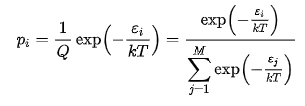
As those excited electrons relax back to lower levels, they emit photons at discrete wavelengths. Planck's law relates each transition to a specific wavelength, and the Boltzmann distribution describes how the plasma's temperature populates the excited states that make emission possible.
From sample to spectrum
A nebuliser converts the liquid sample into a fine aerosol, which a spray chamber delivers into the plasma. Inside the plasma the aerosol is desolvated, atomised, ionised and excited in rapid succession, producing a rich emission spectrum.
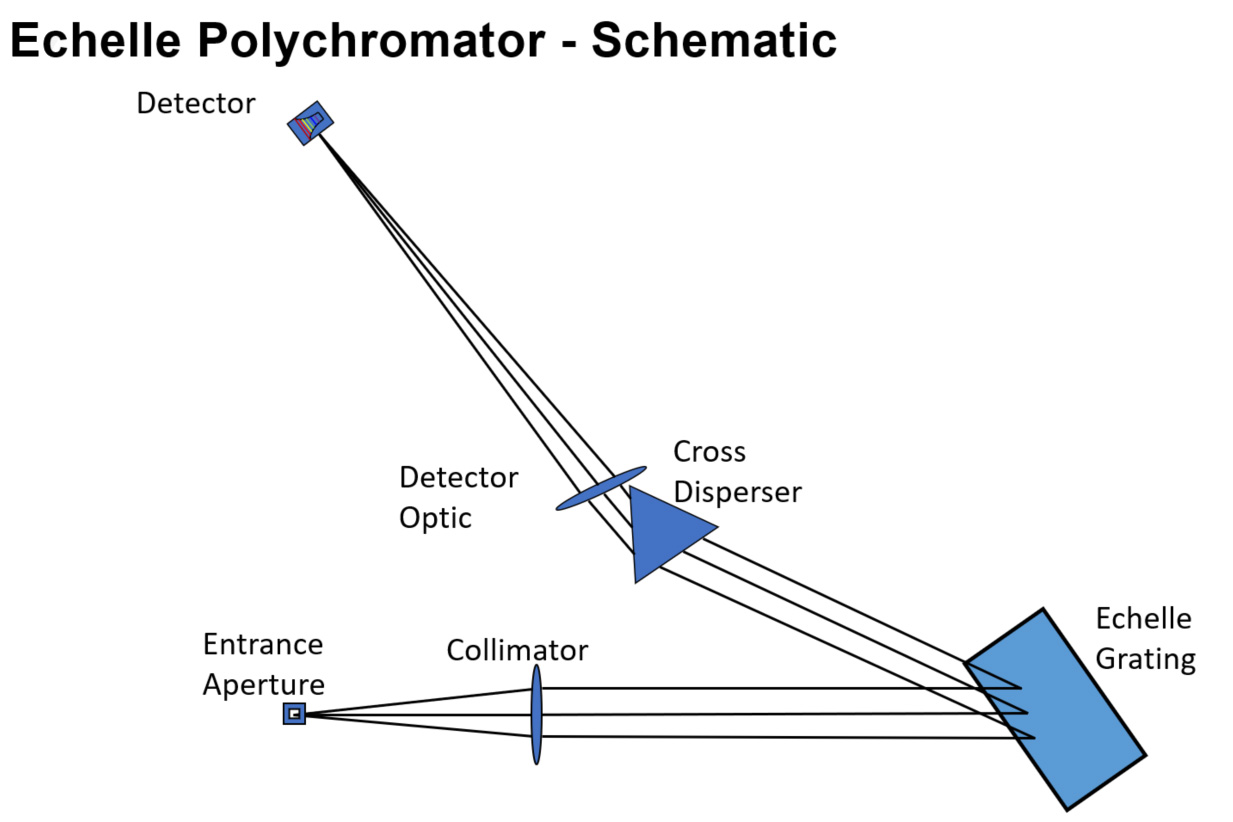
That light is dispersed by the optical system into its component wavelengths. SPECTRO instruments use a compact Echelle-grating optic combined with a CCD detector to capture the whole spectrum simultaneously, so every element is measured in a single reading.
Identification and quantification
The wavelength of each emission line identifies the element; the intensity of the line is proportional to its concentration. After calibration against certified reference solutions, the software converts measured intensities into concentrations and corrects for spectral interferences from neighbouring lines.
The result is simultaneous, multi-element quantification with a wide linear range, from sub-ppb traces to percent-level majors, at high sample throughput.
- Simultaneous multi-element analysis of up to ~70 elements
- Very wide working range — trace (ppb) to major (%)
- High throughput for routine laboratories
- Robust plasma tolerant of difficult and high-matrix samples
- Radial, axial or dual plasma views to optimise each element
Choosing the right ICP-OES instrument
SPECTRO's ICP-OES range spans the high-performance SPECTRO ARCOS, the versatile dual-view SPECTROGREEN and the value-oriented SPECTRO GENESIS. Nucleus, as the authorised SPECTRO distributor in India, helps you select and configure the right analyser — sample introduction, plasma view and software — for your matrices and detection-limit requirements.